TAXFREE purchases from Japan for orders over 15,000 JPY. TaxFree prices will be displayed after the registration process. Register

Japanese onsen ゆ ♨
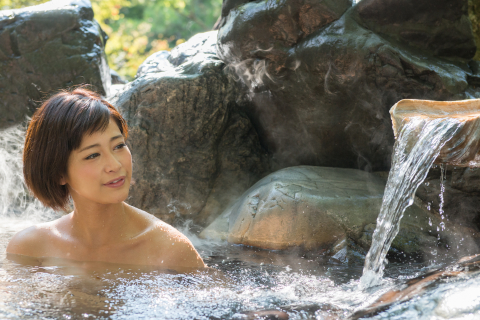
What is an onsen and how to visit one?
Visiting Japan and not experiencing an onsen is like not trying sushi ?.
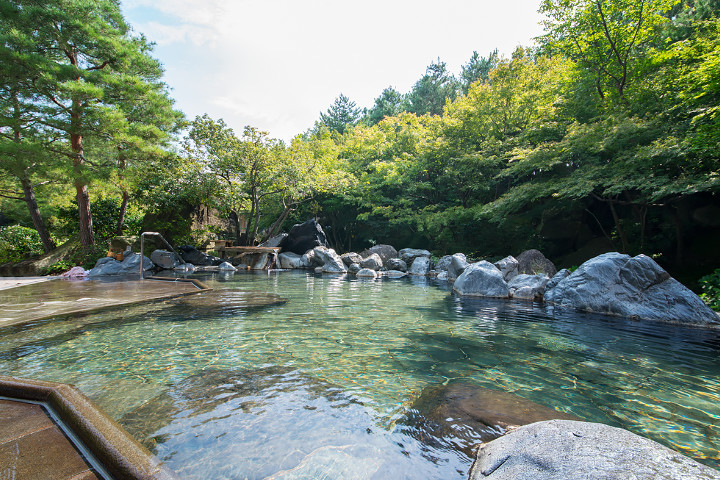
Onsens (denoted by the kanji ゆ) are places of tranquility?, relaxation ?, and nature contemplation?. A place where you can spend the whole day and relax with the whole family. A place where every cell of your body relaxes. An onsen is such a pleasant way to end the day…..
There are over 2000 hot springs in Japan suitable for bathing?
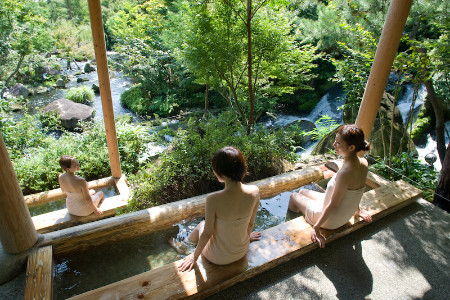
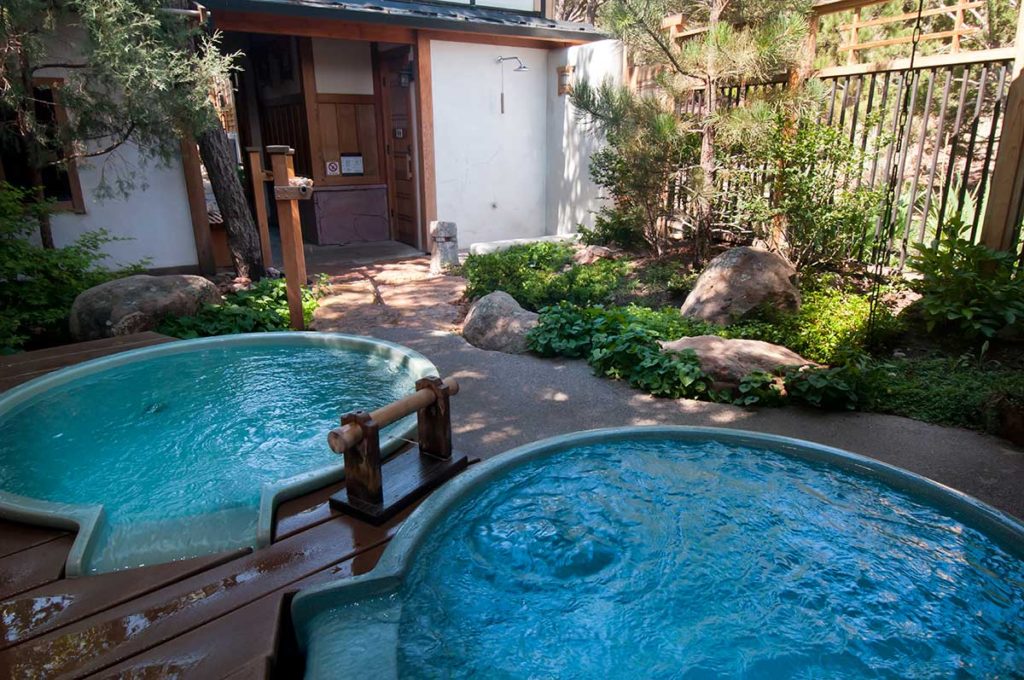
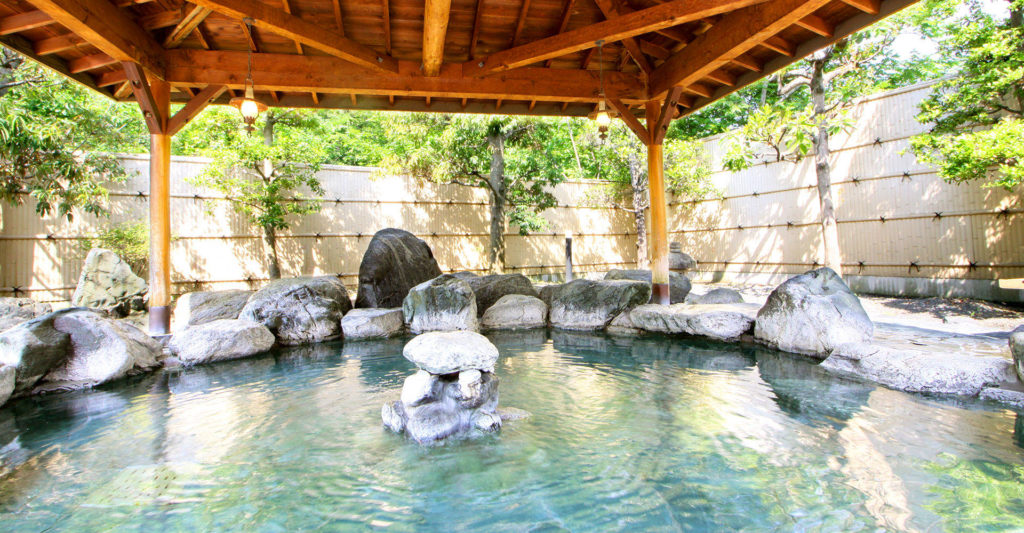
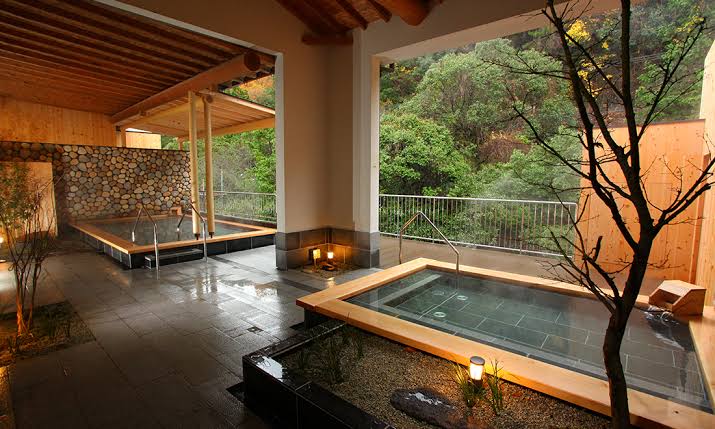
Originally, traditional onsens involved bathing outdoors in a natural body of water filled with hot spring water. Over time, indoor onsens emerged, where special baths are filled with hot mineral water. Today, most public onsens are a combined type of indoor and outdoor baths. A traditional onsen in the old Japanese style has only one mixed bath for men and women, and of course, for children. Today, in addition to such baths, there are more modern ones. Where the baths are separated, with separate areas for men and women. However, children… Children up to 8-9 years old or up to 120-130 cm can visit any part. After that, girls go with girls, boys go with boys.
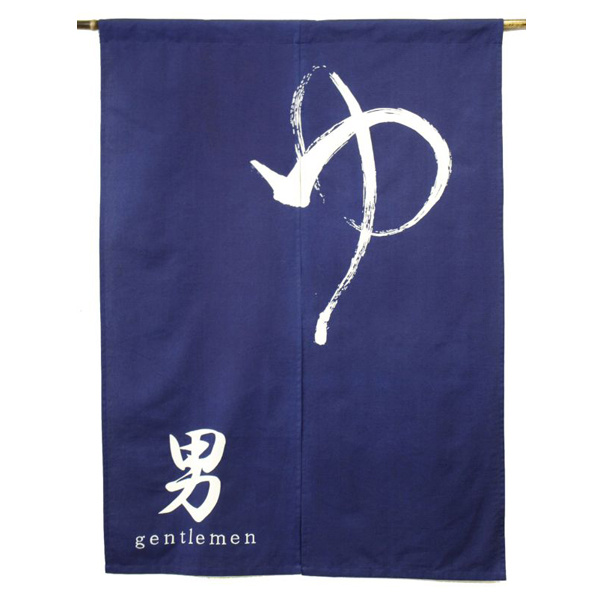
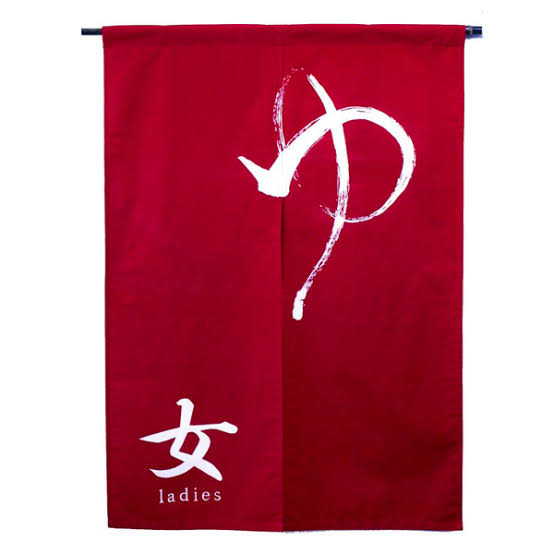
In the overwhelming majority, baths are divided into two zones: baths with hot springs (often separated into male and female), where people wash and relax… And a common relaxation and entertainment area, which includes cafes, restaurants, arcade machines, etc. Raku Spa Garden Nagoya is an onsen that our whole family loves. It’s not just a bath, but 4 floors of relaxation and entertainment. There’s a zone for small children (slides, toys, etc.), a zone with massage chairs, 5 dry saunas (salt, cold, hot), a library, a café, arcade machines, relaxation areas with sofas, hammocks, etc. In general, time flies by unnoticed there.
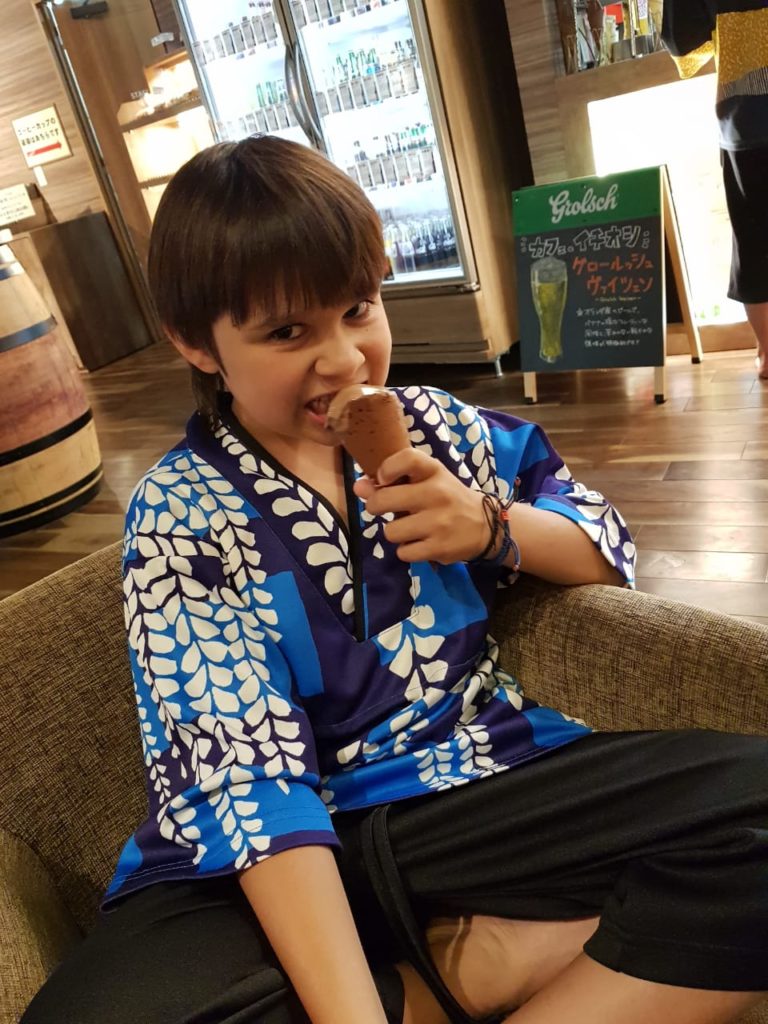
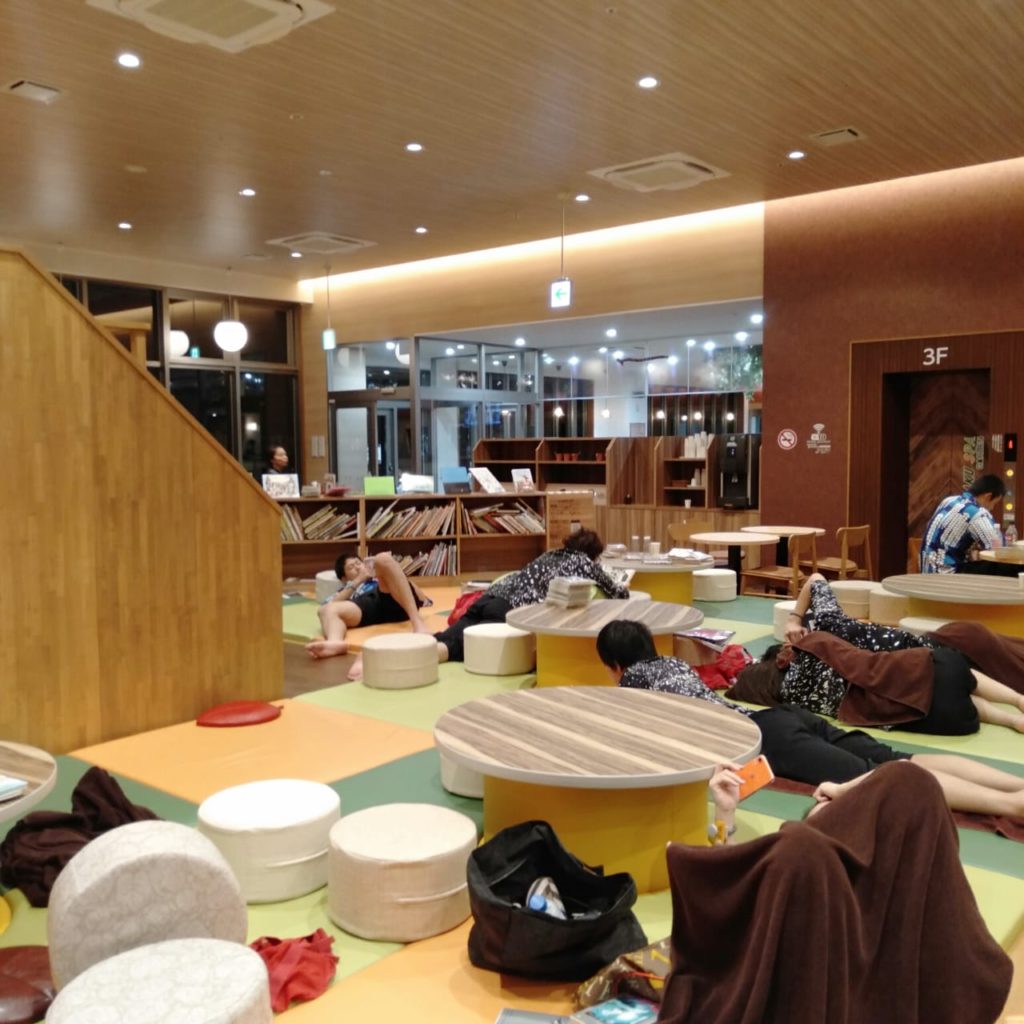
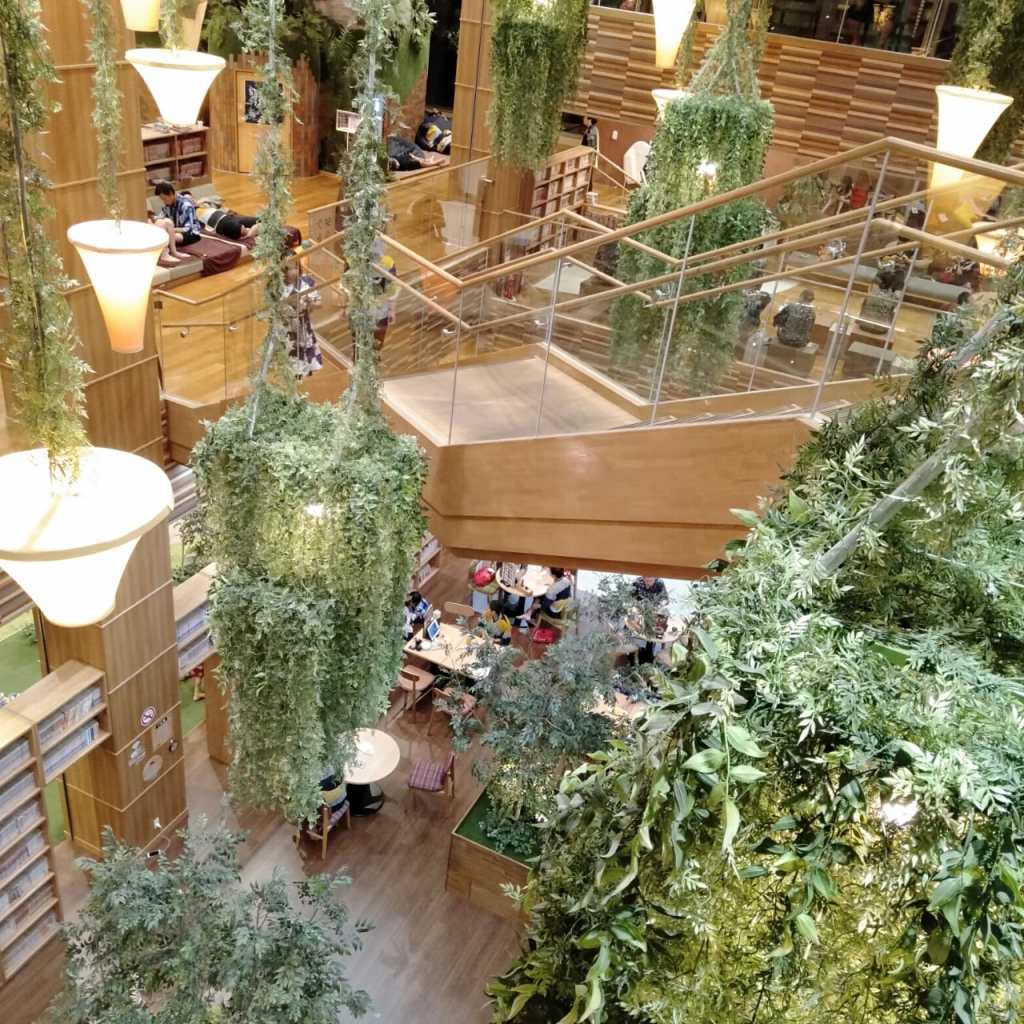
Relaxation Area
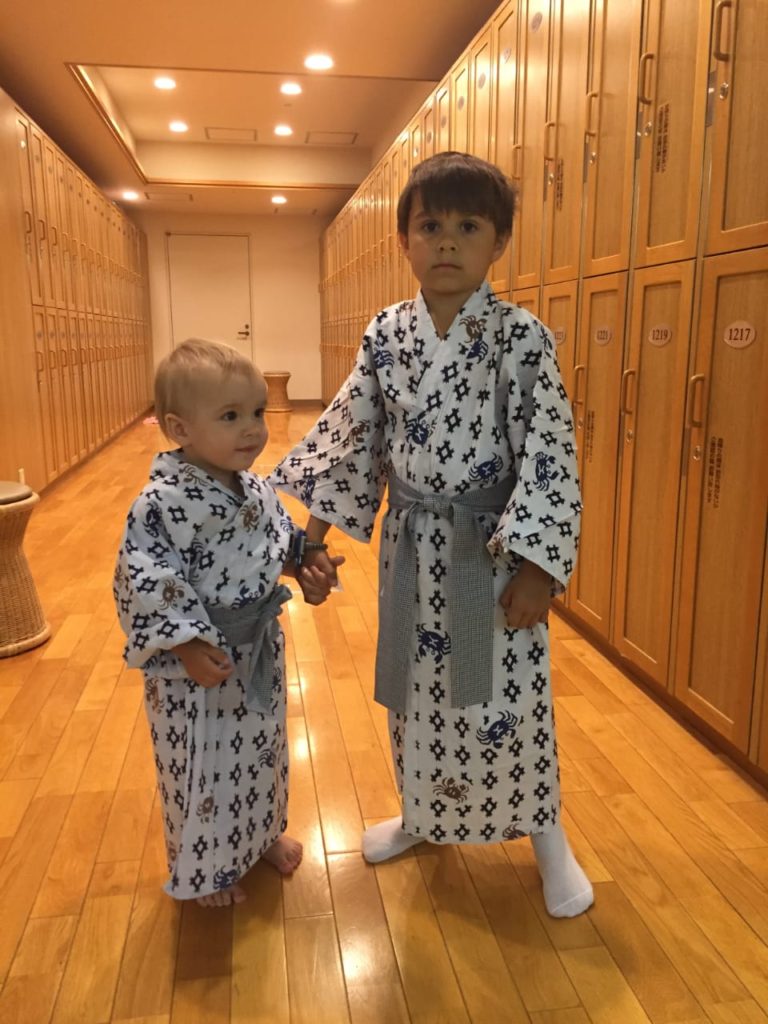
In the relaxation area, special clothing is usually provided for everyone. In some establishments, this may be yukatas (light cotton kimonos), in others – it may be suits (loose pants for the bottom, loose t-shirt/tunic for the top). The same goes for children. Usually, several colors are offered to choose from.
Nagashima Onsen 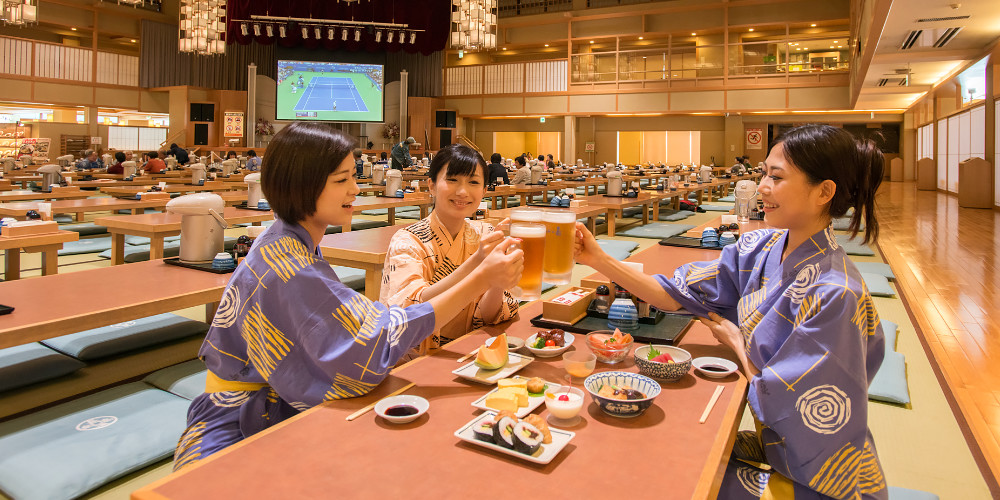
Prices for onsens are quite reasonable: from 700 to 3000 yen (420-1800 rub) for adults and from 300 to 2000 yen (180-1200 rub) for children
Bathing in an onsen — is the best way to treat many ailments. The mineral hot waters of Japan’s onsens can be:
- Hydrogen sulfide
- Saline (NaCl)
- Carbonated (with carbon dioxide)
- Iron-rich
Depending on the composition of the water, onsens treat skin diseases, women’s diseases, vascular diseases, and help with diabetes. However, bathing in hot water can be harmful to some people, for example, those with severe heart conditions.
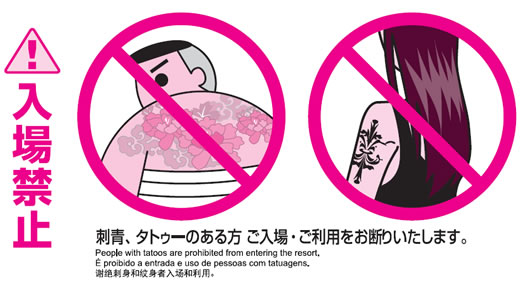
1. Tattoos are prohibited
If you have them, then entry to most public baths is closed to you. But don’t rush to be upset, there is a loophole?. A bandage…. Yes, indeed. Even if the tattoo is very large, it can be covered with several waterproof bandages. It’s important to do this before entering the bath; if the tattoo is seen, it will be too late to cover it….
2. Phones are prohibited
In onsens, using phones is prohibited, or rather, you can only use them in the common area where everyone is dressed.

3. Clothing is not allowed
Before entering the bathing area, all clothing must be removed, absolutely all of it. Usually, several towels are provided in the bath. For the smallest, you can cover your nakedness when entering and exiting the water. If conditions do not allow you to place the towel somewhere on the shore, it is placed on the head. BUT! Under no circumstances should the towel be wet. If you accidentally wet it, wring it out outside the pool. Many are embarrassed by the fact that they need to undress completely. Some try to wear swimsuits, while others refuse to visit such establishments altogether. First, any clothing is prohibited (there are, of course, places where swimsuits can be used, but that’s a completely different story), as this is considered pollution of the water. Second, no one pays attention to your body, and you quickly get used to it and relax. It’s worth trying just once….
4. Maintain cleanliness!
The baths with hot springs themselves are places of crystal cleanliness. Therefore, before bathing in the baths, it is important to rinse off in the shower and only then enter the water. In the shower area, you can use any soap products (usually there is a standard set: shampoo, conditioner, and shower gel, but you can also bring your own products). In the baths themselves, you cannot use masks or any other cosmetics!

5. Silence!
An onsen is a place for quiet relaxation. Therefore, visitors to the hot springs try not to make noise. All conversations should be quiet, as should your overall behavior. Also, swimming in the pools is not allowed, only enjoyment, contemplation, and peaceful soaking. Relax and enjoy an unforgettable experience!
At the exit, you can always tidy yourself up. Comb your hair, dry your hair, apply moisturizing products to your face, and if desired, put on makeup. Most public baths have everything for subsequent care, from combs to skincare cosmetics. Moreover, the “star quality” of the onsen determines the type of products. For example, at Tokyo’s Spa LaQua – shampoos and facial care from Pola (a Japanese premium brand). And at our favorite Raku Spa – famous Dyson hair dryers.
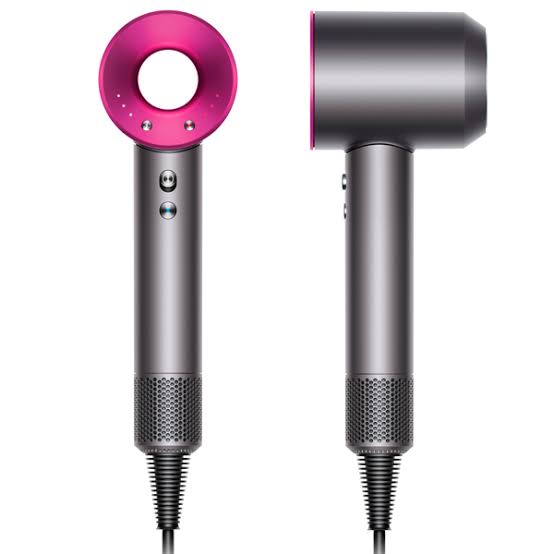
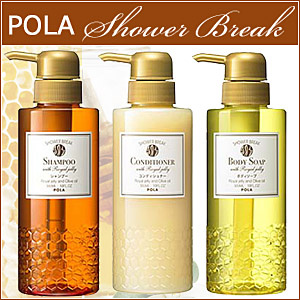
The prices for all this Japanese water pleasure are quite reasonable. For example, entry to a regular city onsen in Nagoya is 700 yen (420 rub) for adults and 300 yen (180 rub) for children, provided that you bring your own towels (but you can also buy a small one there for 100 yen), and bathing is not time-limited. Entry to luxury onsens, such as Spa Laqua in Tokyo, is 2900 yen (1740 rub) for adults, 2090 yen (1250 rub) for children aged 6-17, although there is one downside to this onsen – entry is prohibited for children under 5 years old… But there is another big plus for travelers without children – in such onsens, you can stay overnight (for an additional fee of 1900 yen), in special sleeping rooms, on sofas with personal televisions)))
Some links to onsens in Tokyo and beyond:
- Spa Laqua in central Tokyo – a luxury onsen, everything is wonderful)))
- Oedo Onsen in Odaiba, Tokyo – a very touristy place, beautiful, in a purely Japanese traditional style, with the downside of a lot of tourists; if you go on weekends or Friday evenings, there’s a high chance you’ll wait about an hour in a huge line
- Raku Spa Garden in Nagoya – brand new, opened just a year ago, very beautiful and positive onsen, great time spent with children, impressive large relaxation spaces and excellent themed decorations (New Year, Valentine’s Day, cherry blossoms, summer, autumn, Halloween). There are no downsides, not at all!
- Nagashima Onsen near Nagoya – an amazing onsen, part of the Nagashima Resort complex. Built over 50 years ago, it impresses with its cleanliness and the feeling that it was opened not so long ago. It’s better to come here for a couple of days, or you risk not having enough time for everything – from the “crazy” amusement park, and in summer the water park, to a whole city of shops – there’s a huge Outlet on the premises. In my opinion, the water in this onsen is the best of all we have visited in Japan))